Monday, September 27, 2010

Posture Makes Perfect

First off, I want to sincerely thank all of you who keep up with my blog. I’m getting an overwhelming response from all of you and I love it! This site is growing larger than I ever intended it to be. I keep adding more and more followers every week and have received nothing but great feedback. Since I started this blog, for whatever reason, “Bad to the Bone” comes on whenever I enter a room. With all kidding aside, I’m so glad you all take the time to focus on your health and realize that you are worth every bit of knowledge you can pick up along the way. (Rock fist)


Have you ever looked in the mirror and thought about your posture? Have you ever wondered if you could change, or improve your posture? Well, there are many reasons that factor in to the answer to that question. Your own posture and mobility (or lack there of) of certain muscles in your body is the greatest tool we have to improving our posture and all the benefits that follow. Let me try to simplify that answer down and help you realize how important your posture is and what it means.
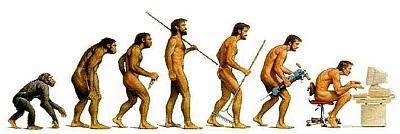
Quite frankly, your posture is a symbol of health and strength. As we age, our posture is continuing to change, for better or for worse. Lifestyle has a huge role in posture. And nowadays, when most of us are sitting at a desk all day looking at a computer inducing horrible effects on our body that sooner than later we’ll get accused of being a creep because our back posture and hip alignment has us bent so far forward that it looks like we’re trying to look up women’s dresses as they walk by. Not what any of us (both men and women I’m assuming) was going for.

Your posture has can induce injury, or reduce movement that may be limiting your daily activity function. Your posture may influence your joint alignment, muscle imbalances, flexibility, and muscle stiffness. I would say that’s a pretty powerful influence on health and whether or not you are feeling good without aches and pains throughout the day. Although, you may have poor posture to some extent, but you may have never had any pain or injuries. I’m not saying poor posture is a direct cause of pain or injury, but it definitely plays a key role over time if issues are not addressed.
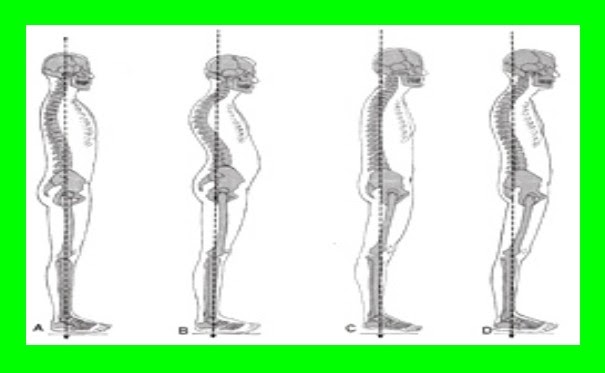
Over time, depending on your lifestyle habits and prolonged posture tendencies, muscle tissues tend to lengthen, shorten, and increase or decrease in stiffness. These habits and tendencies eventually cause asymmetries. With such asymmetries in such areas as the hip can result in leg length differences. These differences are strong correlations with pain and injuries such as sciatica pain/symptoms, and low back pain.

Let’s take a look at some general and common posture problems. One very common problem is rounding in the shoulders and upper back (or hunch back).  This usually causes a forward head position, which limits the necessary mobility in the scapula (shoulder blade), and can reduce back and rotator cuff strength. These are all factors that can be associated with shoulder impingement. In this case, what experts suggest that may help, is that doing specific exercises that would promote proper mobility (in this case-depression, retraction and stabilization of the scapula) in the scapula, which can induce a beneficial effect on posture and strength/stability in the upper body. I’m saying this in a general aspect, as all cases are significantly different and need individualized evaluations and modifications.

Another common problem is pelvic tilting-anteriorly or posteriorly. In a case of an anterior pelvic tilt, the tendency is a tremendous amount of tightness in the anterior hip (hip flexors) and a great deal of over strain on the hamstrings. One would think that you would need to stretch the hamstrings since that is where they are having problems.  But it's quite the opposite of what you want to do.  Anterior tilt also places the hips in internal rotation, flexion (refer back to my attempt at a joke about the creepy old man), and adduction (narrow upper leg stance). This is very a common pelvic alignment with athletes and it’s also why you see so many athletes pull hamstrings and groin muscles. And due to the internal rotation, this puts a lot of stress on the ligaments in the knee, which increase risk of (including myself) ACL tears. For this very broad example, it may help to work on improving mobility in the hip external rotators, strengthening (shortening) the hamstrings, unilateral stability in the hips, and getting a helluva good stretch in the hips flexors.


Improving posture is something that takes a lot of patience, BUT, does not take a lot of time out of your day just to have a beneficial training effect on your body alignment. Not only are their simple strengthening and stretching exercises to get unilateral balances in the joints throughout the body, but also very simple (without equipment) and easy to execute corrective drills to induce proper functions manipulating different mechanic scenarios.

 If  you have any pain, weakness, or posture issues, want to improve performance, or simply want to promote optimal function in your body, all you have to do is be willing to dedicate 5-15 minutes a day to improving your health and helping you feel better without so many aches and pains.  Not only can posture improve pain symptoms, it can also unlock strength breaking through dreaded plateaus.  Consult a proper health professional about any issues and concerns you have, and you can be on your way to feeling better and improving your posture! 

Sunday, September 19, 2010

Whatever It Takes

What is thought? Thought is something more than you do. It is what you are as well. Thought composes our entire being except for the portion of us that is form, or our physical body. This newsletter will take an interesting look at the concept of thought, and how to will yourself to happiness and success.


Your desire to improve your life or your health is really the thought to improve. Your will to live is really your thought to live. Your feelings are also preceded by thought. What I’m trying to get at, is that all your behavior is caused by what you are thinking. Everything on the face of the earth is all thought! Now that you all officially think I’m crazy, let’s apply this to a situation. Say, you’re trying to lose some weight. Instead of seeing (or thinking of) yourself as an overweight shell of the person you want to be, begin to think of yourself as that much happier, healthier person you want to be. Get an image and never let that image out. You will then begin to act on that image, and find your eating and exercise habits adjusting to fit that image. Also, remind yourself that the lighter, healthier person that you visualize is already here, even though he/she is surrounded by some excess weight.

Now let’s talk about how to WILL yourself to success. “I gave it my best shot” or “I really tried hard” are missing something; will. You must be willing to do whatever it takes to make it happen. That’s part of the visualization process I talked about earlier. If it means getting less sleep, or doing things unconventionally, then so be it. Everything- your dreams, your aspirations- that you picture in your mind are already here waiting for you! You just have to be willing.  If you can think it, it means it already exists, because if it didn’t, you wouldn’t be able to think it. If you don’t believe me, ask Einstein!

Willingness is really a state of mind. It’s an internal statement that says “I will be happiness” and “I will take the next step towards making my dream a reality.” Are you willing?

Also, realize there is no such thing as failure. Get this concept out of your thoughts. You never fail, you simply produce results. If you attempt to lift 200lbs and only lift 150lbs, you didn’t fail, just produce a result. Your concept of failure comes from someone else’s opinion of strength. You can either think you are weak, or you can keep working on your strength and proceed from the results.

Regardless of the circumstances of your life, you are the writer, author, director, and producer of your mental images. You always act on these images. Your circumstances do not determine what your life will be. They only reveal all kinds of images you have chosen up until now. Everything from your health to your finances, to your relationships, you are acting on these images. Your mind stores away all of the images that you elect, and you carry these thoughts out like daily assignments. You cannot have a feeling without first having a thought. If you want to change some aspect of your life, start by changing your thoughts. Once your thoughts reflect genuinely what you want to be, the appropriate emotions and behavior will come automatically. Believe it, and you will see it!

*Ideas and concepts of this newsletter were based on the best selling book, “You’ll See it When You Believe It” by Wayne W. Dyer.


Tyler Hanson
BS Kinesiology
AFAA CPT

Monday, August 16, 2010

Fat loss facts and strategies- and then some

I’ve gotten a few emails back with question’s regarding my fat loss facts and strategies issue, so I figured I would do another newsletter on how to further improve your processes in reaching your fat loss goals. I’ve gathered 5 strategies for you that will guide you in not only your exercise selection, but also in developing some theory behind your workouts.


5 Get lean strategies to adhere by when designing your workouts


1. Perform full body workouts- These result in a higher metabolic cost. When you work a lot of muscles at once, it creates a large demand on your metabolism. Simple as that.


2. Perform exercises with a high intensity (fast reps) - Exercising fast will burn more calories according to research. Obviously, I don’t want to sacrifice proper form. Keeping proper form is essential for safety and effectiveness. Improving speed has great benefits (see #4).


3. Eat Pray Love. Sorry, my creativity is lacking this week so this is my best attempt at a joke. Nonetheless, it helped me get to 5 strategies rather than 4. In my book, the number 4 should be retired anyway for obvious reasons-one being 285 consecutive starts for a quarterback. That’s as close to a physical phenomenon as you can get.


4. Use some form of resistance-that can be your own body weight, which is ideal as well as dumbbell’s, kettlebell’s, etc. Building strength is extremely important when the goal at hand is to get leaner. Building strength forces your body to recruit more muscle fibers which will ramp up your metabolic cost of the entire workout. This means you will burn more calories and fat while training. One last reason to build strength to get lean- research shows that boosting strength will improve speed, and being able to move faster allows you to burn more calories and fat during and after your workouts. Ever look at a professional sprinter, compared to a long distance runner?


5. Progression in your workouts is key- never perform the same workout. Ever. Every week should be a challenge to your body even greater than the last, do more reps, or less rest periods, or more weight, etc. Any way that you can bump up the metabolic demand is perfect. In other words, COWBOY UP as they say out west!


Final note-If there one’s thing you get out of this newsletter, I hope it’s that you never want to do the same workout over and over. It’s important to change it up and continue to challenge your body in ways it has never seen. Hopefully this process will also help make it less of a drag and more interesting, while keeping you more focused on the goal at hand. Granted, there will always be days, or weeks, where you need to “take it easy.” No I don’t give you all a free pass to your recliner and 12 pack. Again, switch it up and do something fun-kayaking, tennis, swimming, hiking. Even though you are taking it “easy” you will find that your body will respond a lot better than “pushing through” the mental fatigue and physical burnout. You will refresh not only your body, but your mind; both of which will thank you in the long run by helping you reach your goals that much sooner.


Tyler Hanson

AFAA certified personal trainer

Thanson42@live.com

Monday, August 9, 2010

Tips to consider when exercising for fat loss

This week’s topic is about an email I received recently. Maybe you can relate to it, I’m sure you will all at least find it helpful.

The email was from a girl whose goal was to shed body fat and lose weight. Her typical workout was basically going as long as she could (around an hour) jogging on a treadmill or elliptical. She thought that fat loss was directly related to calories burned in a workout. Well, don’t get me wrong, going for a jog (on a treadmill or outside) has its benefits- increased arterial compliance, decreased blood pressure, improved insulin sensitivity, improved glycemic control- that I don’t want to discourage you and I hope I don’t. But here are a few helpful tips to help you see the big picture of fat loss training (*assuming you are eating correctly*)


Fat loss Facts and Strategies


*Experts state that we need to think less about the metabolic changes (it’s complicated...) that are occurring during a workout and focus more on what’s happening after you leave the gym. (Hint: far more fat loss or gains than you think!)

*Going for a jog ONLY burns calories while you’re doing it, and it can be very hard on your hips, knees, and ankles.*

*High intensity training, on the other hand, will effect your metabolism to keep burning calories long after you stop training - if you know how to do it right.   This is possible through what is called Excessive Post-exercise Oxygen Consumption (EPOC).

*Instead of running on a treadmill, focus on full-body circuits such as split jacks, jumping jacks, and burpees that are performed for numerous rounds with minimal rest (30, 60 or 90 seconds). This will shock your muscles, to induce a large metabolic demand on your body’s cardiovascular, endocrine, and nervous systems. Stoking the fire if I may!


Tyler Hanson

AFAA certified personal trainer

Thanson42@live.com

The Harmony between Hormones and your health

I know I haven’t been talking about the most appealing topics lately, but I’m trying to give you something from every piece of the puzzle, not just training. This week I want to talk about hormones. No not steroids, nor will I be talking anything about PMS-I barely know the difference between an ovary and a belly button.  Just kidding, but seriously.  Two more important hormones that weather you’re looking to get buff like Arnold to impress Maria, or loose the belly with Richard Simmons, this information will help you reach them a lot easier.


Your hormones are controlled by what you eat and when you eat. Your workouts also affect hormones. Throughout the whole day, your body is like a furnace burning through calories. Your body’s furnace is hottest when you are working out, meaning it will burn through energy stores (or wood for a furnace) a lot faster compared to when your furnace temperature is cooler. This means that eating around your workouts is extremely important-even for weight loss! It’s not rocket science, but it can be very confusing for people, as far as what to eat. So, either you can keep reading this and find out some answer’s, or you can pick up your ninja turtles, G.I. Joe’s, or lincoln logs, and have a blast if this is too monotonous.

Glad you decided to keep reading, you had me worried! So, the hormones that I’m most concerned with are Cortisol and Insulin. Cortisol is a stress hormone released by the adrenal glands. Believe or not, your body is under a lot of stress when you exercise! So this means that when your workout, your cortisol levels are through the roof.  If these stress levels stay elevated, it can be counterproductive to recover from your workouts since it inhibits amino acids and glucose from entering the muscles. By not allowing your body to recover after your workouts, you will induce less lean muscle with a greater percentage of body fat in your body since your muscles are unable to replenish. Someone with more lean muscle tissue in their body will burn through more fat stores a lot faster, than, someone who has less lean muscle tissue. And yes, you can also be thin (not bulky!) with a higher amount of lean muscle tissue. If Cortisol is the bad guy, the hero is Insulin- IF he arrives within a half hour before and after your workout. Seriously, how many people do you know that use a hero and villain analogy when describing hormones? That’s a rhetorical question; I know, outstanding. You need to boost your Insulin levels surrounding your workouts, so he can use his super powers to offset the negative effects of Cortisol. These super powers are results from being able to provide your body with fast-acting amino acids (building blocks to protein) along with refueling muscle glycogen from being depleted-compared to someone who doesn’t fuel up before and after their workouts. What works best for me is raisins (1/4 cup to ½ cup) to replenish muscle glycogen, and a protein shake with amino acids (no, this will not make you “bulk up” women!!) before and after your workouts. Honey is also another great, low calorie, insulin booster. Also, Vitamin C before and after your workouts can also minimize the negative effects of Cortisol- try taking about 250mg.

So, there you have it. Your body will simply be running in circles, going no where-just like a hamster on a wheel if you refuse to fuel your muscles before and after your workouts (for both weights and/or “cardio”). What’s the point of working out if you’re not doing your body any good, am I right? You will not lose weight (or fat), gain muscle, get ripped, or improve your health without paying attention to your hormones!


Tyler Hanson,

AFAA certified personal trainer

Thanson42@live.com

Friday, August 6, 2010

Water: It's important, but WHY

After my first newsletter on water, I recieved a question about one of the water facts I posted in my first newsletter. Thank you for your inquiry!

I believe the question is about a reference to the fact stated: Preliminary research indicates that 8-10 glasses of water a day could significantly ease back and joint pain for up to 80% of sufferers. This can be referenced from a recent study conducted at the University of Washington. The study was performed on 20 subjects who suffered some form of either joint or back pain. It was an eight week study monitoring water intake for two 10 subject groups. One group of 10 subjects consumed no more than 7 glasses of water each day for 8 weeks. The other group of 10 subjects consumed 8-10 glasses of water each day for 8 weeks. The results indicated that the group of subjects consuming 8-10 glasses of water a day, 8 out of the 10 subjects stated some form of improved symptoms of joint or back pain. The other group only yielded 2 out of the 10 subjects improving symptoms. Granted, this study did not state any other pain management strategies each subject in the study applied, or how many ounces each glass of water contained, which both make this study as skeptical as any. But let’s look at the relevance of water on the human body for further closure.

Our body is made up of about 50-70% water, depending on our gender, age, and bodyfat. Our blood is made up of 83% water, our bones 22% water, our muscles are 75% water, our brain is over 75%, and our liver is over 96% of water! So, if our water intake is inadequate, you can see that our body is greatly affected by the deficiency. Blood is what brings nutrients to our whole body, including the connective tissues (which hold a lot of water) at each joint. The nutrients in blood are what repair the body from being broken down. There are five types of connective tissues, which are cartilage, ligaments, tendons, fascia, and aponeurosis. All types of these connective tissues are slightly different in their make up, but all have the common purpose of supporting and stabilizing each joint in our body to promote fluent movement at the joint.

Fact of the matter is, what I was hoping to accomplish with these facts was to generate thought on ways to improve your own healthy living capabilities. I hope to motivate you to improve your own health strategies, and to get you choosing healthier choices to fuel your body. Thank you again for your interest in my newsletter, and your health!


Tyler Hanson

AFAA certified personal trainer

Thanson42@live.com (cell): 715-507-0214